Friday, March 7, 2025

Wallace Line and Biodiversity


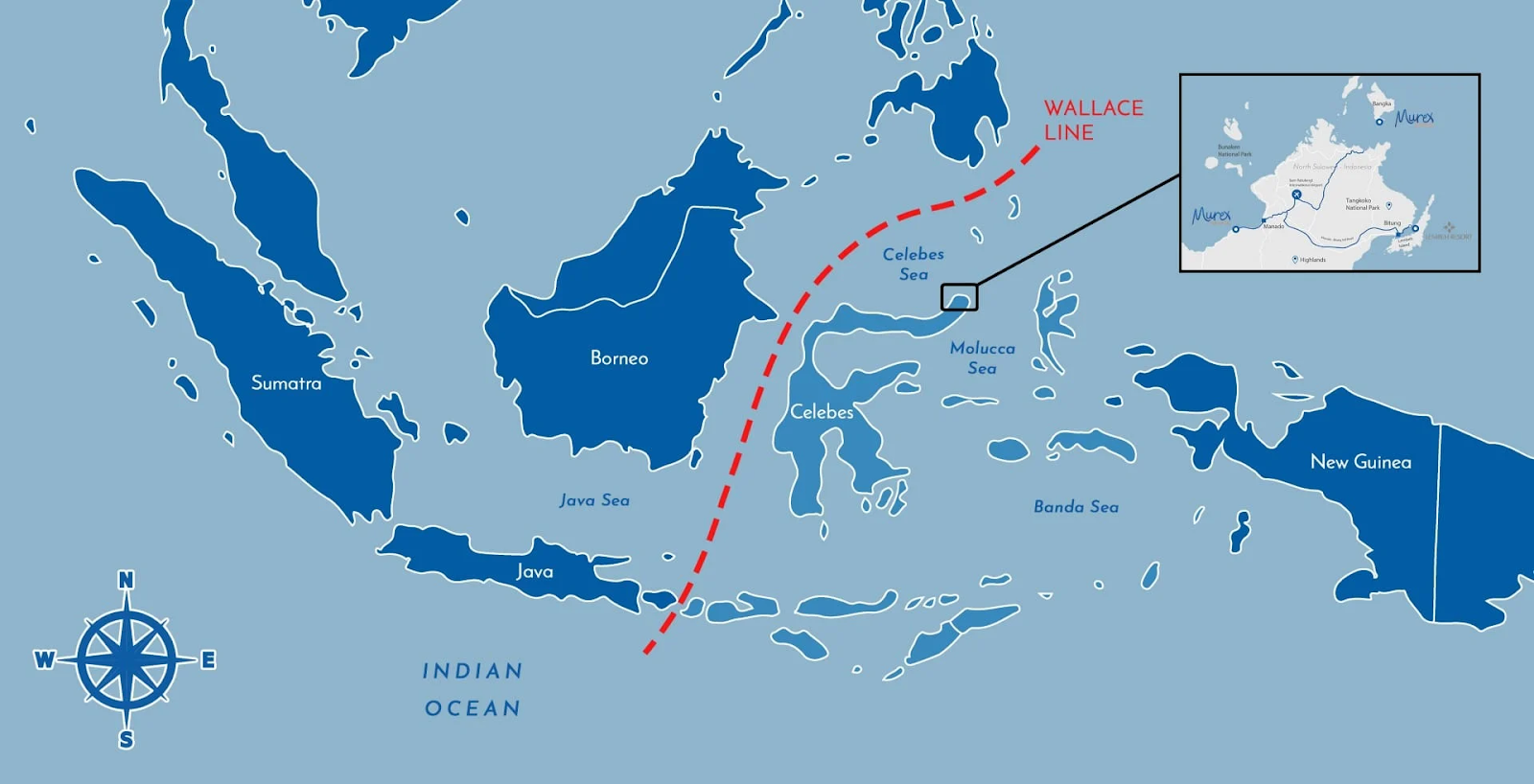
The Wallace Line is concept in biogeography. It marks the distinct biodiversity found in Asia and Australia. This line was identified by Alfred Russel Wallace in the late 19th century. He observed a sharp contrast in species composition between these two regions. The Wallace Line runs between Bali and Lombok, extending north between Borneo and Sulawesi, and curves south of Mindanao. This geographical barrier has deep implications for the distribution of species.

Alfred Russel Wallace’s Observations

Wallace conducted extensive research over eight years. He noted a dramatic shift in animal species as he crossed the Wallace Line. On either side of the line, different organisms thrived. For instance, Australia is known for its marsupials, while Asia is home to a diverse range of mammals. Wallace’s observations laid the groundwork for modern biogeography.

Unique Biodiversity of Sulawesi

Sulawesi is particularly intriguing. It is home to species not found anywhere else, such as tarsiers and the anoa. Despite being close to Borneo, the island supports distinct flora and fauna. Wallace struggled to classify Sulawesi’s species. He recognised their affiliations with various regions, including Africa and India. This complexity raises questions about species migration and adaptation.

Geological History and Species Distribution

The distribution of species can be traced back to geological events. The Malay archipelago comprises over 25,000 islands. Wallace theorised that these islands were once connected to the Asian mainland. As they drifted apart, species evolved independently. This isolation led to the unique biodiversity observed. Australia’s separation from Antarctica also contributed to the current distribution of species.

Recent Discoveries and Climate Impact

Recent studies reveal new vital information about species relationships across the Wallace Line. Research involving 20,000 species indicated that tropical islands remained warmer than Australia. This climate allowed Asian species to migrate more easily to Australia. Conversely, Australian species faced challenges in moving to Asia due to climatic differences. The findings suggest that the Wallace Line is more complex than initially thought.

Conservation and Future Challenges

Understanding the Wallace Line is crucial for conservation efforts. The Indo-Malayan archipelago is experiencing high rates of habitat destruction. Knowledge of historical species distribution can inform strategies to protect biodiversity. Advanced technologies and modelling are enhancing our understanding of species movement. Experts suggest focusing on habitat preservation rather than redrawing biogeographical lines.


International Research Awards on Civil and Environmental Engineering
==================================

Our Website: https://civil-engineering-conferences.scifat.com/
Award Nomination: https://civil-engineering-conferences.scifat.com/award-nomination/?ecategory=Awards&rcategory=Awardee
Contact us: civil@scifat.com

Follow us on social medias for more updates........

Tumblr: https://www.tumblr.com/alicecivil2727
Facebook: https://www.facebook.com/civilengineeringaward/
Instagram: https://www.instagram.com/civilengineeringaward/
pinterest: https://in.pinterest.com/civilbulk2727/
Twitter: https://x.com/LilyS2727


#WallaceLine #Biodiversity #Evolution #Biogeography #SpeciesDistribution #WildlifeConservation #EndangeredSpecies #EcologicalZones #NaturalHistory #FloraAndFauna #TropicalEcology #IslandBiogeography #EnvironmentalScience #EcosystemDiversity #HabitatConservation #Zoology #Botany #ClimateAndBiodiversity #NatureResearch #MarineBiodiversity


Saturday, February 8, 2025

Nitrogen Dioxide Pollution Impact on Crop Yield


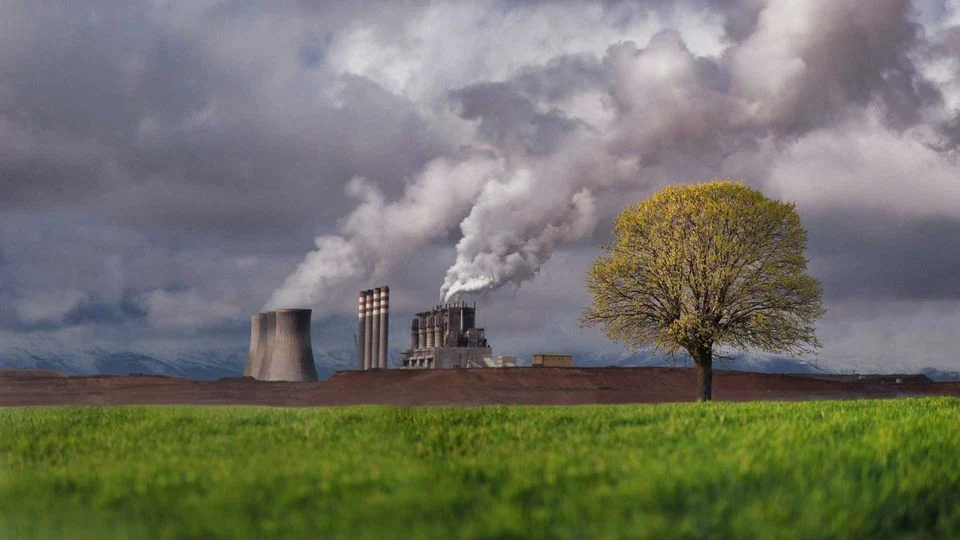
Nitrogen dioxide (NO2) is air pollutant. It primarily arises from the combustion of fossil fuels such as coal, oil, and natural gas. Road traffic is the main contributor to outdoor NO2 levels. This pollutant poses serious health risks and has detrimental effects on agriculture. Recent studies have revealed the extent of its impact on crop yields in India, particularly for wheat and rice.

Formation and Sources of Nitrogen Dioxide

Nitrogen dioxide forms when fossil fuels are burned at high temperatures. It is one of several nitrogen oxides (NOx) contributing to air pollution. Major sources include vehicle exhaust, industrial emissions, and coal-fired power plants. The combustion process releases NO2 into the atmosphere, where it can persist and affect air quality.

Health Impacts of Nitrogen Dioxide

Exposure to nitrogen dioxide can lead to various respiratory issues. It causes inflammation of the airways, worsens cough and wheezing, and reduces lung function. Vulnerable populations, such as children and those with pre-existing respiratory conditions, are at an increased risk of asthma attacks and other health complications.

Agricultural Consequences

Recent research indicates that NO2 emissions impact agricultural productivity in India. The study found that nitrogen dioxide from coal power stations contributes to a decline in wheat and rice yields. Estimates suggest that crop losses due to NO2 could amount to nearly a billion dollars annually. This is critical for India’s food security, as wheat and rice are staple crops.

Statistical from Research

The Stanford study utilised a statistical model to analyse the relationship between NO2 levels and crop yields. It examined data from 144 power stations and satellite measurements of NO2 concentrations. The findings revealed that coal power plants affect NO2 levels up to 100 kilometres away from their location. This geographical influence marks the widespread impact of emissions on agriculture.

Mitigation Strategies

To address NO2 emissions, several mitigation strategies can be implemented. Effective range hoods that vent outdoors can reduce indoor NO2 levels. Proper ventilation during cooking and the use of alternative cooking appliances, such as electric and induction stoves, can further minimise emissions. Regulatory measures targeting coal-fired power plants are essential for reducing agricultural losses and health risks.

Economic Implications


The economic analysis within the study suggests that eliminating NO2 emissions from coal power stations could boost agricultural output. By reducing emissions during critical growing seasons, the value of rice and wheat production could increase by approximately $420 million and $400 million per year, respectively.


#NitrogenDioxide #AirPollution #CropYield #SustainableAgriculture #EnvironmentalImpact #PlantHealth #ClimateChange #AgriculturalScience #PollutionEffects #GreenFarming #ResearchAwards #ScienceFather


Social medias :


Our Website: https://civil-engineering-conferences.scifat.com/


Award Nomination: https://civil-engineering-conferences.scifat.com/award-nomination/?ecategory=Awards&rcategory=Awardee


Contact us: civil@scifat.com


Tumblr: https://www.tumblr.com/alicecivil2727


Facebook: https://www.facebook.com/civilengineeringaward/


Instagram: https://www.instagram.com/civilengineeringaward/


pinterest: https://in.pinterest.com/civilbulk2727/


Twitter: https://x.com/LilyS2727

Friday, February 7, 2025

Extremely Large Telescope Threatened by Energy Project in Chile


The Atacama Desert in northern Chile is renowned for its exceptional conditions for astronomical observation. Its clear, dark skies have attracted multiple world-class observatories. However, a proposed green energy megaproject threatens to disrupt these conditions. This project, backed by AES Andes, aims to construct an extensive energy infrastructure for hydrogen and green ammonia production. Its proximity to the Paranal Observatory, home to the European Southern Observatory’s Extremely Large Telescope, poses risks to astronomical research.

Importance of the Atacama Desert for Astronomy

The Atacama Desert is considered one of the best locations on Earth for astronomical studies.
Its high altitude and minimal light pollution provide ideal conditions.
The Paranal Observatory is a key facility in this region, which has become a hub for nearly 40% of the world’s ground-based astronomy.
The area is expected to increase this capacity to 60% within the next decade.

The Extremely Large Telescope (ELT)

The Extremely Large Telescope is a $1.5 billion project under construction.
It features a primary mirror nearly 40 meters in diameter.
The ELT aims to revolutionise our understanding of the universe, including dark energy and exoplanet imaging.
Its location on Cerro Armazones is crucial for maintaining optimal observational conditions.

The INNA Project

The Integrated Energy Infrastructure Project for the Generation of Hydrogen and Green Ammonia, or INNA, is a $10 billion initiative.
It plans to utilise over 3,000 hectares of land.
Concerns arise as parts of the project may be as close as five kilometres to the Paranal Observatory.
This proximity could result in detrimental effects on astronomical observations.

Risks to Astronomical Observations

ESO officials warn that the INNA project could lead to increased dust emissions and light pollution. These factors may severely compromise the telescope’s capabilities. A study brought into light that Paranal is the darkest site among 28 major observatories globally. The potential light pollution from the INNA project could irreparably impact the pristine night skies essential for astronomical research.

Future of Ground-Based Astronomy

The ongoing developments in the Atacama Desert are critical for future astronomical discoveries. The ELT and other advanced telescopes are expected to contribute to our understanding of the universe. Any disruption caused by the INNA project could limit access to key areas of exploration. This would hinder the scientific advancements that the ELT is poised to deliver.


#Astronomy #SpaceScience #Telescopes #Astrophysics #Cosmology #SpaceExploration#ExtremelyLargeTelescope #ELT #EuropeanSouthernObservatory #ESO #Observatory #GiantTelescopes#EnvironmentalImpact #Sustainability #EnergyProject #Conservation #ProtectAstronomy #DarkSkies#Chile #AtacamaDesert #CerroArmazones #ScientificResearch


Our Website: https://civil-engineering-conferences.scifat.com/


Award Nomination: https://civil-engineering-conferences.scifat.com/award-nomination/?ecategory=Awards&rcategory=Awardee


Contact us: civil@scifat.com


social media;

Monday, January 27, 2025

Increasing Frequency of Multi-Year Droughts Worldwide


Multi-year droughts (MYDs) are increasingly common and severe, as brought into light by a recent 40-year study. The research indicates that these droughts have expanded globally, impacting ecosystems and water supplies. This trend is linked to climate change, which exacerbates drought conditions. The study, conducted by a consortium of researchers from various institutions, analysed data from 1980 to 2018.
About Multi-Year DroughtsMulti-year droughts are prolonged dry periods lasting two years or more.
These events lead to soil moisture depletion. They also result in reduced streamflow, which can have severe consequences for agriculture and ecosystems. MYDs can cause massive crop failures and increased tree mortality.
The study identified 13,176 MYDs from 1980 to 2018, each representing an event of duration.

Global Impact of Droughts

The research showed that the global land area affected by MYDs has increased by approximately 50,000 square kilometres annually. The most affected regions include temperate grasslands. The study identified the ten most severe MYDs across various continents, with notable occurrences in central Chile, the western United States, and parts of Australia.

Notable Drought Events

Among the top ten MYDs, five occurred between 2007 and 2018. The eastern Congo basin experienced the longest MYD, lasting from 2010 to 2018 and affecting an area of over 1.4 million square kilometres. The southwestern Amazon also faced a nine-year MYD, with its peak impact occurring in 2015. These events illustrate the extensive reach and duration of MYDs globally.

Influence of El Niño Events

The study found a correlation between MYD occurrences and El Niño events in 1998, 2010, and 2015. This suggests that the effects of El Niño extend beyond the tropics, influencing drought patterns in various regions. The years following these El Niño events saw some of the largest areas impacted by MYDs.

Future Projections and Preparedness

The study warns that long-lasting droughts may become more frequent and severe in the 21st century. It emphasises the need for better preparedness and collaborative efforts to mitigate the impacts of these extreme events. Effective strategies are crucial for adaptation to the changing climate and its associated challenges.


Our Website: https://civil-engineering-conferences.scifat.com/


Award Nomination: https://civil-engineering-conferences.scifat.com/award-nomination/?ecategory=Awards&rcategory=Awardee


Contact us: civil@scifat.com


Tumblr: https://www.tumblr.com/alicecivil2727


Facebook: https://www.facebook.com/civilengineeringaward/


Instagram: https://www.instagram.com/civilengineeringaward/


pinterest: https://in.pinterest.com/civilbulk2727/


Twitter: https://x.com/LilyS2727


#DroughtCrisis
#ClimateChange
#WaterScarcity
#GlobalWarming
#SustainableWater
#ClimateAction
#DroughtAwareness
#WaterConservation
#ExtremeWeather
#ClimateResilience
#GlobalDrought
#EnvironmentalImpact
#DroughtRecovery
#WaterManagement
#FutureOfWater
#ClimateEmergency
#DroughtSolutions

Monday, January 6, 2025

What is Project VISTAAR?


IIT Madras has partnered with the Ministry of Agriculture and Farmer Welfare to launch Project VISTAAR. This initiative aims to enhance the agricultural extension system through digitalisation. The pilot project, known as the Virtually Integrated System to Access Agricultural Resources, focuses on strengthening agricultural extension services. Start-ups play important role in this context by leveraging technology to offer innovative solutions to farmers.

Objectives of Project VISTAAR

Project VISTAAR aims to improve the efficiency and effectiveness of agricultural extension services. It seeks to provide farmers with access to relevant information and resources. The project will enable better communication between farmers and agricultural experts. By utilising digital tools, it aims to enhance the overall productivity of the agriculture sector.

Role of Start-ups in Agriculture

Start-ups are vital in introducing innovative technologies in agriculture. They address unique challenges faced by farmers through tailored solutions. The collaboration between IIT Madras and various start-ups encourages an environment for growth and innovation. Start-ups can improve access to market information and resources for farmers, thus enhancing their productivity.

Collaboration Details

This agreement aims to enrich the VISTAAR platform with vital information on agricultural start-ups. The Centre for Research on Start-ups and Risk Financing at IIT Madras has compiled data on over 12,000 start-ups in the agriculture sector. This collaboration will facilitate easy access to this information for farmers and stakeholders.

Benefits of Digitalisation

Digitalisation of the agricultural extension system offers numerous advantages. It expands the outreach of advisory services to a broader audience. Farmers will receive high-quality, timely, and contextual information. This includes guidance on crop production, marketing, and supply chain management. Additionally, farmers will be informed about government schemes that can benefit them.

Importance of Agricultural Innovation


Agriculture is a mainstay of India’s economy and social structure. Ensuring its sustainability is a critical policy objective. Innovative technologies from agricultural start-ups play a very important role in achieving this goal. They contribute to making agriculture more sustainable and climate-resilient. The collaboration with IIT Madras is expected to enhance access to these technologies for farmers


Future Prospects of Project VISTAAR

The future of Project VISTAAR looks promising with its focus on digitalisation. It aims to create a robust framework for agricultural extension services. By connecting farmers with innovative solutions, it enhances the agricultural landscape. The initiative has the potential to transform how farmers access information and resources, leading to improved agricultural practices


Our Website: https://civil-engineering-conferences.scifat.com/


Award Nomination: https://civil-engineering-conferences.scifat.com/award-nomination/?ecategory=Awards&rcategory=Awardee


Contact us: civil@scifat.com


Tumblr: https://www.tumblr.com/alicecivil2727


Facebook: https://www.facebook.com/civilengineeringaward/


Instagram: https://www.instagram.com/civilengineeringaward/


pinterest: https://in.pinterest.com/civilbulk2727/


Twitter: https://x.com/LilyS2727

#ProjectVISTAAR
#SkillDevelopment
#AdvancedResearch
#InnovationInEducation
#EmpoweringGrowth
#SkillTraining
#KnowledgeSharing
#EducationForAll
#ResearchAndDevelopment
#STEMEducation
#TechInnovation
#SustainableDevelopment
#FutureOfWork
#EmpowerThroughEducation
#BuildingFutures
#AwarenessForChange
#LearnToLead

Friday, January 3, 2025

Work and Energy in Fluid Dynamics


Fluid dynamics examines the behaviour of fluids in motion. This includes both liquids and gases. The study focuses on the forces acting on these fluids. Work and energy are crucial concepts in this field. They describe how energy is transferred and transformed within fluid systems.

Basic Concepts
Work

Work occurs when a force causes displacement in the direction of that force. Mathematical Expression: W=F⋅d⋅cos(θ)W=F⋅d⋅cos⁡(θ)
Variables:WW – Work done
FF – Force applied
dd – Displacement
θθ – Angle between the force and displacement direction

In fluid dynamics, work can be done by pressure forces acting on the fluid.
Energy

Energy is the capacity to perform work. In fluid systems, energy can take various forms.Kinetic Energy: Energy due to fluid motion.Formula: KE=12mv2KE=12mv2
Potential Energy: Energy due to fluid position in a gravitational field.Formula: PE=mghPE=mgh
Internal Energy: Energy related to the temperature and phase of the fluid.

Conservation of Energy

The First Law of Thermodynamics states that energy cannot be created or destroyed. It can only be transformed from one form to another.

Bernoulli’s Equation

Bernoulli’s Equation illustrates the conservation of mechanical energy in a flowing fluid.Formula: P+12ρv2+ρgh=constantP+12ρv2+ρgh=constant
Variables:PP – Pressure energy
ρρ – Fluid density
vv – Fluid velocity
gg – Acceleration due to gravity
hh – Height above a reference point
Work Done by Fluids
Work in Pumping and Turbines

Pumps and turbines are critical devices in fluid systems.Pumps: Devices that perform work on fluids to move them from one location to another.
Turbines: Devices that extract energy from fluid flow, converting kinetic energy into mechanical energy.

Work Done by Pressure Forces

Pressure work occurs when a fluid expands or compresses.Formula: W=PΔVW=PΔV
Variables:PP – Pressure
ΔVΔV – Change in volume
Energy Losses in Fluid Systems
Frictional Losses

Frictional losses occur due to the viscosity of the fluid. This resistance leads to energy loss.Viscous Drag: The resistance faced by a fluid as it flows.
Darcy-Weisbach Equation: Used to calculate head loss due to friction in a pipe.Formula: hf=fLDv22ghf=fLDv22g
Variables:hfhf – Head loss due to friction
ff – Darcy friction factor
LL – Length of the pipe
DD – Diameter of the pipe
vv – Fluid velocity
gg – Acceleration due to gravity

Turbulence and Energy Dissipation

Turbulent flow is characterised by irregular fluid motion. This condition increases energy loss due to chaotic movements.Energy Dissipation: The conversion of mechanical energy into thermal energy due to friction and turbulence.
Applications of Work and Energy in Fluid Dynamics

Engineering Applications

Fluid dynamics plays a vital role in various engineering fields.Hydraulic Systems: Utilise fluid power to perform work, such as in hydraulic lifts and brakes.
Aerodynamics: Studies forces acting on objects in motion through air, essential for aircraft design.
Environmental Applications

Fluid dynamics also impacts environmental studies and management.

Hydrology: About energy transfer in water bodies aids in flood management and water resource management.
Meteorology: Energy dynamics in the atmosphere influence weather patterns and climate.


Our Website: https://civil-engineering-conferences.scifat.com/


Award Nomination: https://civil-engineering-conferences.scifat.com/award-nomination/?ecategory=Awards&rcategory=Awardee


Contact us: civil@scifat.com


Tumblr: https://www.tumblr.com/alicecivil2727


Facebook: https://www.facebook.com/civilengineeringaward/


Instagram: https://www.instagram.com/civilengineeringaward/


pinterest: https://in.pinterest.com/civilbulk2727/


Twitter: https://x.com/LilyS2727


#FluidDynamics
#EnergyInFluids
#WorkAndEnergy
#FluidMechanics
#FlowAnalysis
#ResearchInFluidDynamics
#PhysicsOfFluids
#FluidEnergyStudies
#EngineeringResearch
#FluidDynamicsResearch
#AerospaceEngineering
#Hydrodynamics
#Thermodynamics
#MechanicalEngineering
#EnergySystems

Thursday, January 2, 2025

Gaza Faces Hypothermia Crisis Amid Ongoing Conflict


The humanitarian crisis in Gaza has intensified due to severe cold weather. In just one week, six infants have succumbed to hypothermia. The ongoing conflict has restricted access to essential winter aid and medical support. Over 45,500 lives have been lost, predominantly among children and women. The population of 2.3 million, many displaced, faces dire conditions with inadequate food and water supplies.

About Hypothermia

Hypothermia is a medical condition where the body loses heat faster than it can produce it. The normal core temperature for humans is about 37 degrees Celsius (98.6 degrees Fahrenheit). This temperature must be maintained for vital organs to function properly. When the body temperature drops below 35 degrees Celsius (95 degrees Fahrenheit), hypothermia begins to set in.

Temperature Thresholds for Hypothermia

Hypothermia can occur even at temperatures above 4 degrees Celsius (40 degrees Fahrenheit). Factors like rain, wind, and immersion in cold water can accelerate heat loss. The severity of hypothermia is categorised as follows –Mild Hypothermia – 32–35 degrees Celsius (89.6–95 degrees Fahrenheit)
Moderate Hypothermia – 28–32 degrees Celsius (82.4–89.6 degrees Fahrenheit)
Severe Hypothermia – Below 28 degrees Celsius (82.4 degrees Fahrenheit)

Symptoms of Hypothermia

Symptoms vary based on the severity of hypothermia. Initially, the body loses heat through the skin, and blood vessels constrict to conserve warmth. Shivering occurs as the body attempts to generate heat. However, prolonged exposure leads to muscle fatigue and confusion. As the condition worsens, shivering stops, heart rate and breathing slow down, and unconsciousness may occur. Severe cases can result in cardiac arrest if not treated promptly.

Treatment Options for Hypothermia

Timely intervention can reverse hypothermia. For mild to moderate cases, moving the individual to a warm environment, removing wet clothing, and using blankets are effective. Warm, non-alcoholic drinks can aid recovery if the person is conscious. Severe hypothermia requires medical intervention, including passive rewarming with blankets and active rewarming techniques, such as intravenous warm fluids.

Infants and Hypothermia Risk


Infants are particularly vulnerable to hypothermia due to their larger surface area relative to body mass. They lose heat more rapidly and may not show clear signs of cold stress. Malnutrition exacerbates this risk, and with food shortages due to the conflict, infants in Gaza are at an increased risk of hypothermia.

Current Weather Conditions in Gaza

In late December 2024, Gaza’s temperatures ranged from 19 to 20 degrees Celsius (66 to 68 degrees Fahrenheit) during the day and dropped to 11 to 12 degrees Celsius (52 to 54 degrees Fahrenheit) at night. The harsh winter has been compounded by heavy rains and strong winds, damaging makeshift shelters. Residents face challenges in obtaining fuel for heating, leading many to seek firewood from trees.

Key Facts about the Gaza StripIt is in the eastern Mediterranean basin.
It shares borders with:Egypt to the southwest.
Israel to the north and east.
Mediterranean Sea to the west.
Gaza is surrounded by walls on three sides. Its western border is under the control of Israel, restricting the region’s access to sea.
There are 3 border crossing – Rafah Crossing (under the control of Egypt) and Karem Abu Salem Crossing and Erez Crossing (under the control of Israel).
Gaza Strip is one of the most densely populated regions globally.
“Open Air Prison” is the term widely used to describe Gaza’s living conditions.

Historical SignificanceSix-Day War (1967): Israel captured Gaza from Egypt and initiated military occupation.
Israeli Withdrawal (2005): Israel removed its settlements but imposed intermittent blockades.
Hamas came to power in Gaza in 2007. Following this, Israel and Egypt enforced a permanent blockade, citing security concerns.
The blockade caused severe economic crisis, leading to high levels of unemployment, food insecurity and aid dependency.


Our Website: https://civil-engineering-conferences.scifat.com/


Award Nomination: https://civil-engineering-conferences.scifat.com/award-nomination/?ecategory=Awards&rcategory=Awardee


Contact us: civil@scifat.com


Tumblr: https://www.tumblr.com/alicecivil2727


Facebook: https://www.facebook.com/civilengineeringaward/


Instagram: https://www.instagram.com/civilengineeringaward/


pinterest: https://in.pinterest.com/civilbulk2727/


Twitter: https://x.com/LilyS2727


#GazaCrisis
#HumanitarianAid
#HypothermiaEmergency
#ConflictImpact
#GazaUnderSiege
#SaveGaza
#MedicalRelief
#WinterCrisis
#HumanRights
#GlobalSolidarity
#HealthEmergency
#EndTheBlockade
#ChildrenInConflict
#CrisisResponse
#GazaRelief
#SupportGaza
#ConflictZoneAid
#EmergencyMedicalHelp
#WarImpact
#PeaceForGaza

Fatehah Mohd Omar | Celebrating Excellence in Environmental Engineering | #WorldResearchAwards #GlobalCivilEngineeringAwards #ResearchAwards #ResearchExcellence #GlobalRecognition

Fatehah Mohd Omar | Celebrating Excellence in Environmental Engineering   The Global Civil Engineering Awards proudly recognizes Fatehah Moh...